Looks like you're in [country-name]. Switch to the [site-name] for local equipment and services?

Go to [site-name]
Stay here

User account menu

  • 844.873.4948
  • English

    Europe

    • Français
    • Deutsch
    • English
    • Nederlands

    North America

    • English
    • Español
    • Français
  • Sign In / Register
United Rentals Home
  • Rent
    • All Equipment
    • Popular Rentals
    • Scissor Lifts
    • Boom Lifts
    • Telehandlers
    • Mini Excavators
    • Skid Steers & Track Loaders
    • Rental Resources
    • Rental Protection Plan (RPP)
  • Buy
    • All Used Equipment
    • Popular Used Equipment
    • Buy Forklifts
    • Buy Scissor Lifts
    • Buy Boom Lifts
    • Buy Mini Excavators
    • Buy Compressors
    • Buying Resources
    • Financing
    • United Guard™
  • Total Control
    • Account Dashboard
    • Invoices & Payments
    • Items On Rent
    • UR Mobile App
  • Invoices & Payments
    • Invoices
    • Lien releases
    • Apply for credit
  • Locations
    • Find a Location
  • Training
    • Course Catalog
    • Training Credentials
    • United Academy
    • About United Academy
    • Care & Support
    • United Academy - Course Catalog
  • Solutions
    • Worksite Perfomance Solutions
    • Specialty Solutions
      • Ground Protection Matting Solutions
      • Commercial Trucks
      • Flooring & Facility Solutions
      • Power & HVAC
      • Climate Solutions
      • Fluid Solutions
      • Trench Safety
      • Reliable Onsite Services
      • Tool Solutions
      • Storage Containers & Mobile Offices
      • Communications
      • Industrial Blinds
    • Power & HVAC
    • Climate Solutions
    • Fluid Solutions
    • Trench Safety
    • Reliable Onsite Services
    • Tool Solutions
    • Storage Containers & Mobile Offices
    • Commercial Trucks
    • Flooring & Facility Solutions
    • Ground Protection Matting Solutions
    • Industry Solutions
      • Power Generation & Distribution
      • Chemical
      • Oil & Gas Refining
      • Oilfield Services
      • Civil and Infrastructure
      • Restoration and Remediation
      • Government Solutions
      • Agriculture
    • Power Gen. & Distribution
    • Data Centers
    • Renewable Energy
    • Chemical
    • Oil & Gas Refining
    • Oilfield Services
    • Restoration & Remediation
    • Civil & Infrastructure
    • Government Solutions
    • Emergency Solutions
    • Emergency Response
  • Services
    • Digital Solutions
    • Total Control®
    • Mobile App
    • Notifications
    • Benchmarking
    • Wedge
    • Downloadable Catalogs
    • Repair & Maintenance Services
    • Owned Equipment Service
    • Rental Equipment Service
    • Training Services
    • United Academy
  • Safety
    • Safety Commitment
    • Safety Training
    • Safety Articles
  • Company
    • About Us
      • About Us
      • Our Culture
      • Board of Directors
      • Corporate Leadership
      • Mission & Values
      • Sponsorships & Partnerships
      • Awards & Recognition
      • Corporate Responsibility Report
      • Supplier Diversity
      • Project Uptime
    • Investor Relations
      • Annual Report
      • Reports & Proxy Statements
      • Corporate Governance
      • Investor Press Releases
      • Investor Events, Calls & Presentations
      • Research Coverage
      • SEC Filings
    • Sustainability
    • Careers
      • Search Careers
      • Career Areas
    • Events
      • Events Calendar
      • Webinar Series
    • In the News
    • Press Releases
    • Project Uptime Blog
  • Project Uptime
  • Equipment
  • Data
  • Safety
  • Expertise
  • All Categories
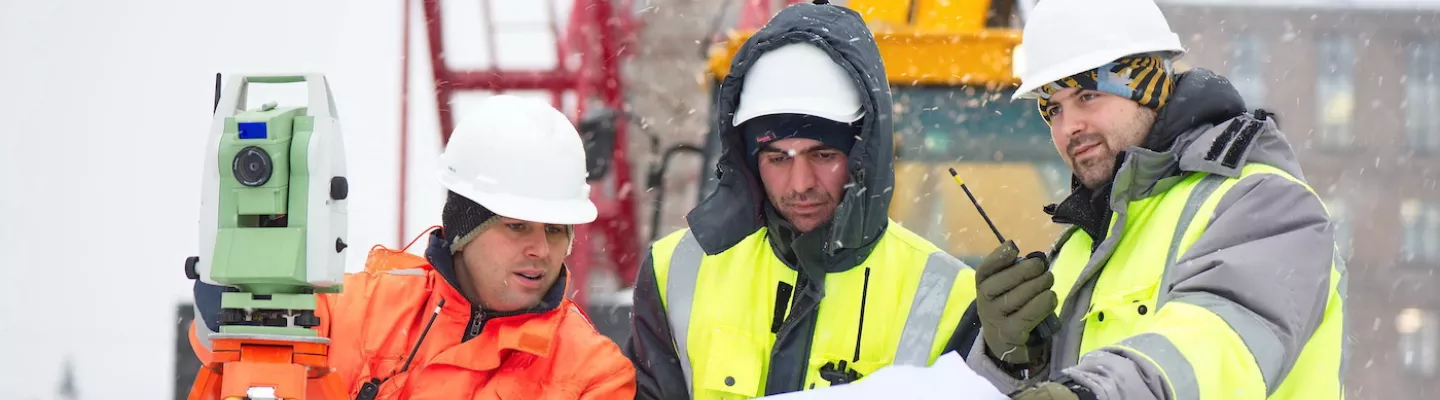
workers in safety vests and hard hats at a construction site in the winter

Temporary Construction Heater Safety Tips

Temporary construction heaters allow work to continue in cold weather, but use them properly to avoid a tragedy.

February 17, 2023
  • Safety Tips & Guides

Winter weather can put a freeze on jobsite productivity, interfering with concrete curing, making plaster brittle, turning the ground hard as rock and decreasing worker efficiency. Temporary construction heaters let you keep projects on track when the mercury dips, but they pose a risk of fire and carbon monoxide poisoning if not used properly. Before you fire up (or plug in) heaters, brush up on these construction heater safety tips.

Following heater safety best practices will not only protect crews, materials and buildings but also satisfy your insurance company and help ensure that any claim you need to file for a heater-related incident isn’t denied. (Check your insurance policy to see which types of heaters are allowed.)

Temporary heating for construction: General safety tips

Construction heater safety protocols vary depending on the type of heater and where you’re using it. But these tips apply to most heaters.

  • Use a certified heater. Heaters certified by Underwriters Laboratories (UL), CSA Group, ETL or TÜV Rheinland meet North American standards for safety.

  • Look for an automatic shut-off. An automatic shut-off feature will turn off the heater if it tips over or gets too hot.

  • Follow the manufacturer’s instructions. The owner’s manual will explain essential safety information specific to your machine, such as how far away fuel containers should be stored and ventilation requirements.

  • Mount on a hard, level, noncombustible surface. Many heaters can’t be placed directly on wood floors or other flammable surfaces. If the owner’s manual requires the unit to be placed on a heat-insulating material or concrete, that material must extend for 2 feet or more beyond the heater in all directions.

  • Maintain clearances. Insufficient clearance from combustible materials is a main cause of heater-related fires. The heater’s data plate will indicate how far away the heater must be placed from combustible materials. Mark the space and make sure everyone on the jobsite keeps this area clear.

  • Keep the heater at least 10 feet away from tarpaulins and canvases. Tightly secure these coverings so they don’t blow toward the heater.

  • Have a fire extinguisher nearby. All jobsites with temporary heaters should have a fire extinguisher with a rating of at least 3A 10BC stored within 50 feet of a heater. Make sure workers know where it is and how to use it.

Safety tips for direct fired heaters

In direct fired heaters, also called salamanders, fresh air passes through an open flame, as with a gas grill. These are self-contained heaters (and can’t be ducted). They’re popular because they’re efficient to run, compact and more portable than indirect fired heaters. Because they emit fumes that contain carbon monoxide, they must be used outdoors or in large, well-ventilated areas to minimize the risk of carbon monoxide poisoning.

  • Do not used in a small, enclosed space. Choose an indirect fired heater or electric heater instead.

  • Check the owner’s manual for ventilation requirements. OSHA requires that worksites maintain sufficient ventilation when using direct fired heaters. The owner’s manual will provide the specifics.

  • Monitor carbon monoxide levels. If you’re using a direct fired heater indoors or in an area where sufficient ventilation could be a concern, test carbon monoxide levels regularly.

Safety tips for indirect fired heaters

In indirect fired heaters, the flame is enclosed in a sealed burn chamber, which warms a heat exchanger. It’s the heat exchanger that warms the air. The fumes stay in the heat exchanger and are exhausted through a flue or chimney. Because the heated air does not contain carbon monoxide, the heater can be used to warm small, enclosed spaces with the proper ductwork. You can either place the heater inside and vent the fumes outside or place the heater outside and duct the warm air in.

Indirect fired heaters are popular because they reduce the risk of carbon monoxide poisoning and fire. Still, safety precautions apply.

  • Keep fumes away from work areas. Aim the flue stack away from any work areas, doors, open windows or air intake areas.

  • Protect fuel tanks. Store fuel tanks away from work areas and from the heater itself. The owner’s manual will give requirements for how far fuel must be stored from the heater. Place physical barriers around the fuel tanks.

  • Conduct regular inspections. Indirect heaters may be out of sight, but they shouldn’t be out of mind. Check the heater and ducting for blockages, leaks and other maintenance concerns.

Construction propane heater safety

Propane heaters can be direct fired or indirect fired. If you’re using a propane heater to warm the jobsite, follow these tips.

  • Never use an outdoor propane heater indoors. Doing so poses a serious risk of carbon monoxide poisoning.

  • Never use a propane heater in an unventilated space. Even an indoor propane heater must be used in a well-ventilated space, such as a building with no windows installed.

  • Match the heater to your space. Propane heaters come in a variety of sizes and types. Choose one that’s appropriate for your square footage and available ventilation. If you’re heating an indoor area, choose a heater that holds 100 pounds of propane or less.

  • Check the tanks. Propane tanks should be free from bulges, dents, rust and fire damage. Check them for leaks before using.

  • Store tanks outdoors. They should be upright and at least 6 feet away from the heater.

  • Check hoses regularly. Look for cracks or wear. Avoid running hoses through a doorway, which can increase the risk of pinching or cracking. If you must run a hose through a window, use a block to hold the window open and avoid pressure on the hose.

  • Turn it off correctly. Turn off the gas at the container, then drain the pipes or hoses before turning off the heater.

  • Post No Smoking signs around the heater, hoses and tanks.

Safety tips for electric heaters

Electric heaters can be used indoors since they don’t create fumes, and some commercial models can be used with ducting. But like all heaters, they still pose a fire risk. If you’re using an electric heater, keep these tips in mind.

  • Know the voltage. Many electric heaters that are large enough for a construction site or industrial site need to be hardwired in by an electrician. Don’t try to plug one into a standard 120V outlet.

  • Look for overheat protection on commercial heaters. These will safely shut down the unit if the blower is restricted.

  • Check the power cord on smaller portable electric heaters. Make sure it’s free of wear and tear. Don’t use an extension cord. Plug the heater directly into a wall outlet with GFCI.

  • Use only in dry areas. Water and electricity don’t mix. Water increases the risk of electric shock.

What heaters are safe to leave on overnight?

Oftentimes, jobsites need heat even after the workday is through to protect the pipes from freezing and help materials dry or cure. That can leave you wondering what heaters are safe to leave on overnight.

The bottom line: Temporary construction heaters should not be left unattended. A worker should always be on site to check on them periodically.

When it comes to motoring temperatures and adjusting the heater’s thermostat, that can be done remotely. WEDGE, the remote monitoring system from United Rentals, lets you remotely monitor the ambient temperature of a jobsite or the temperature of poured concrete. Customizable alerts tell you if the temperature goes out of a predetermined range. Smart Heater hardware attached to rental heaters allows you to remotely adjust the heater’s thermostat via a desktop or mobile device using the WEDGE dashboard.

Temporary construction heaters are safe when used properly and can help keep your workers warm and your projects on track through winter. To get the most out of your heater and minimize risks, choose the right heater, set it up properly and remember Ben Franklin’s words to the people of fire-prone Philadelphia: “An ounce of prevention is worth a pound of cure.”

Visit our online marketplace to browse our wide selection of construction heaters for rent.

  • Facebook Facebook
  • X X
  • Linkedin Linkedin
  • Email Email
  • Print Print
  • Copy Link Copy Link
  • RSS Feed RSS Feed

Was this article helpful?

Yes No

Env: Test -> Release Tag: builds/github/2026/develop/build-1030

Trending Articles

How to Cut Concrete Using a Concrete Saw
Contractors: Are You Violating OSHA's Portable Toilet Guidelines?
What Is a Mini Excavator Used For?
Wood Chipper Safety: Tips for Avoiding Accidents and Injuries
Locating Pipes with Acoustics and Mapping Software

Related Equipment

Heaters

HVAC Equipment

Heaters

Heater
  • Facebook
  • Linkedin
  • X
  • Youtube

24/7 Customer Care

844.873.4948

  • Mobile App
    • Download for Android
    • Download for Apple
  • Equipment
    • Rent Equipment
    • Buy Equipment
    • Credit Application
    • Rental Protection Plan
    • United Guard™
    • Download Equipment Catalog
    • GSA Contract Holder
  • Solutions & Services
    • Total Control®
    • Specialty Solutions
    • Industry Solutions
    • Customer Equipment Solutions
    • United Academy
  • Support
    • Find a Location
    • Contact Us
    • Rental Equipment Service
  • About Us
    • Corporate Fact Sheet
    • Corporate Responsibility
    • Our Culture
    • Awards & Recognition
    • Project Uptime
  • Careers
    • Campus
    • Events
    • Military
    • Search Jobs
  • Investor Relations
    • Annual Reports
    • Presentations
  • © 2026 United Rentals, Inc.
  • Privacy Policy
  • Terms of Use
  • Legal Terms and Conditions
  • Equipment Directory
  • Branch Directory
  • Cookie Settings
United Rentals Home

User account menu

  • 844.873.4948
  • Europe

    • Français
    • Deutsch
    • English
    • Nederlands

    North America

    • English
    • Español
    • Français
  • Sign In / Register
  • Rent
    • All Equipment
    • Popular Rentals
    • Scissor Lifts
    • Boom Lifts
    • Telehandlers
    • Mini Excavators
    • Skid Steers & Track Loaders
    • Rental Resources
    • Rental Protection Plan (RPP)
  • Buy
    • All Used Equipment
    • Popular Used Equipment
    • Buy Forklifts
    • Buy Scissor Lifts
    • Buy Boom Lifts
    • Buy Mini Excavators
    • Buy Compressors
    • Buying Resources
    • Financing
    • United Guard™
  • Total Control
    • Account Dashboard
    • Invoices & Payments
    • Items On Rent
    • UR Mobile App
  • Invoices & Payments
    • Invoices
    • Lien releases
    • Apply for credit
  • Locations
    • Find a Location
  • Training
    • Course Catalog
    • Training Credentials
    • United Academy
    • About United Academy
    • Care & Support
    • United Academy - Course Catalog
  • Solutions
    • Worksite Perfomance Solutions
    • Specialty Solutions
      • Ground Protection Matting Solutions
      • Commercial Trucks
      • Flooring & Facility Solutions
      • Power & HVAC
      • Climate Solutions
      • Fluid Solutions
      • Trench Safety
      • Reliable Onsite Services
      • Tool Solutions
      • Storage Containers & Mobile Offices
      • Communications
      • Industrial Blinds
    • Power & HVAC
    • Climate Solutions
    • Fluid Solutions
    • Trench Safety
    • Reliable Onsite Services
    • Tool Solutions
    • Storage Containers & Mobile Offices
    • Commercial Trucks
    • Flooring & Facility Solutions
    • Ground Protection Matting Solutions
    • Industry Solutions
      • Power Generation & Distribution
      • Chemical
      • Oil & Gas Refining
      • Oilfield Services
      • Civil and Infrastructure
      • Restoration and Remediation
      • Government Solutions
      • Agriculture
    • Power Gen. & Distribution
    • Data Centers
    • Renewable Energy
    • Chemical
    • Oil & Gas Refining
    • Oilfield Services
    • Restoration & Remediation
    • Civil & Infrastructure
    • Government Solutions
    • Emergency Solutions
    • Emergency Response
  • Services
    • Digital Solutions
    • Total Control®
    • Mobile App
    • Notifications
    • Benchmarking
    • Wedge
    • Downloadable Catalogs
    • Repair & Maintenance Services
    • Owned Equipment Service
    • Rental Equipment Service
    • Training Services
    • United Academy
  • Safety
    • Safety Commitment
    • Safety Training
    • Safety Articles
  • Company
    • About Us
      • About Us
      • Our Culture
      • Board of Directors
      • Corporate Leadership
      • Mission & Values
      • Sponsorships & Partnerships
      • Awards & Recognition
      • Corporate Responsibility Report
      • Supplier Diversity
      • Project Uptime
    • Investor Relations
      • Annual Report
      • Reports & Proxy Statements
      • Corporate Governance
      • Investor Press Releases
      • Investor Events, Calls & Presentations
      • Research Coverage
      • SEC Filings
    • Sustainability
    • Careers
      • Search Careers
      • Career Areas
    • Events
      • Events Calendar
      • Webinar Series
    • In the News
    • Press Releases
    • Project Uptime Blog